Driving in Mongolia: Roads, GPS, Fuel & Off-Road Realities
Driving in Mongolia is not just a mode of transportation; it is the adventure itself. You will cross dry riverbeds, navigate completely unmarked dirt tracks, and share the road with massive herds of camels.
However, the logistics of overlanding here are entirely different from road-tripping in North America or Europe. If you lose cellular service, run out of gas, or rely on the wrong map, a minor inconvenience can quickly turn into a major emergency.
To ensure you are fully prepared for the 2026 travel season, here is the ground truth on Mongolian roads, fuel logistics, and navigation.
Ensure your vehicle is ready for the steppe. Don't get stranded with bad tires or a faulty engine. Book a rigorously inspected 4x4 with JOROO today.
1. The Reality of Mongolian Roads
When looking at a map of Mongolia, you must understand the difference between paved highways and the unpaved steppe.
- Paved "Millennium Roads": Mongolia has been aggressively paving highways that connect Ulaanbaatar to provincial centers (Aimag capitals). The main northern route to Khuvsgul Lake, the southern route toward Dalanzadgad (near the Gobi), and the eastern road to Khentii are mostly paved. However, expect sudden, massive potholes and severe frost-heave bumps that require heavy braking.
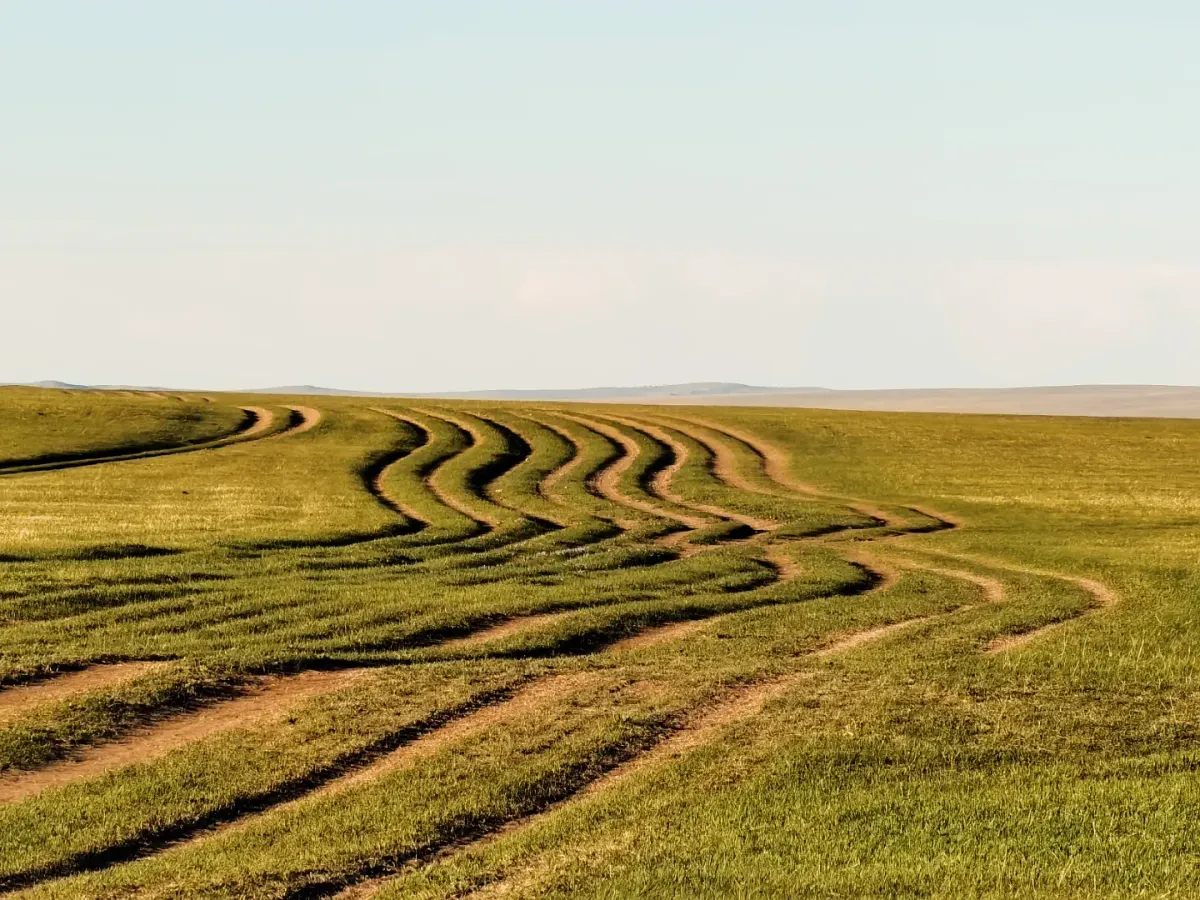
- The "Multi-Track" Steppe: The moment you leave the paved highway to visit a Ger camp, a monastery, or a natural landmark, the road vanishes. Instead, you will find a "multi-track"—often 5 to 15 different dirt tracks running parallel across the grass or sand. All tracks generally go in the same direction, but some lead into deep mud while others are smoother. Choosing the right track is a learned skill.
2. Navigation: Why Google Maps Will Fail You
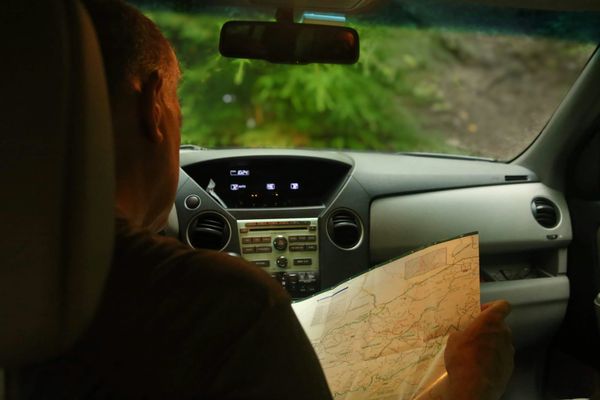
Do not attempt to navigate the Mongolian countryside using Google Maps. Google Maps relies heavily on cell tower triangulation and official road data, both of which disappear outside of major towns. Google often draws a straight line between two points, sending tourists directly over impassable mountains or deep rivers.
You must download offline topographic maps. Here are the two apps you need:
- Maps.me (or Organic Maps): These apps run on OpenStreetMap (OSM) data. Because the Mongolian off-road community heavily updates OSM, almost every tiny dirt track, river crossing, and nomadic trail is accurately mapped.
- Gaia GPS or AllTrails: Excellent for visualizing elevation changes and topographical barriers, especially if you are driving into the Altai Mountains.
Tip: Always download your map regions while on Wi-Fi in Ulaanbaatar before you pick up your rental car.
3. Fuel Logistics on the Steppe
Running out of gas is one of the biggest fears for tourists. Fortunately, fuel is widely available if you know how the system works.
Where to Refuel
Every provincial center (Aimag) and almost every small village (Soum) has at least one gas station. Stick to major national chains when possible, as their underground tanks are cleaner and less likely to contain water-contaminated fuel:
- Petrovis
- Shunkhlai
- MT (Magnai Trade)
- Sod Mongol
Fuel Types and 2026 Prices
- Gasoline (A-92): This is standard unleaded regular gas and is available everywhere. As of mid-2026, the price is roughly 4,000 MNT per liter (about $1.52 USD). Premium gas (A-95 or A-98) is incredibly rare outside of Ulaanbaatar; do not rent a vehicle that requires premium fuel.
- Diesel: Widely available, as almost all local commercial trucks run on it. It usually costs slightly more than A-92.
- Payment: Most major gas stations accept Visa and Mastercard, but power outages in rural villages can knock out credit card machines. Always carry at least 200,000 MNT in cash specifically for emergency fuel.
The Golden Rule of Mongolian Fuel: When your tank hits half-full, fill it up at the very next station you see. Never attempt to stretch your fuel on the steppe.
4. Off-Road Driving Realities
If you are renting a 4x4 for self-driving, you must be prepared for the physical realities of the terrain.
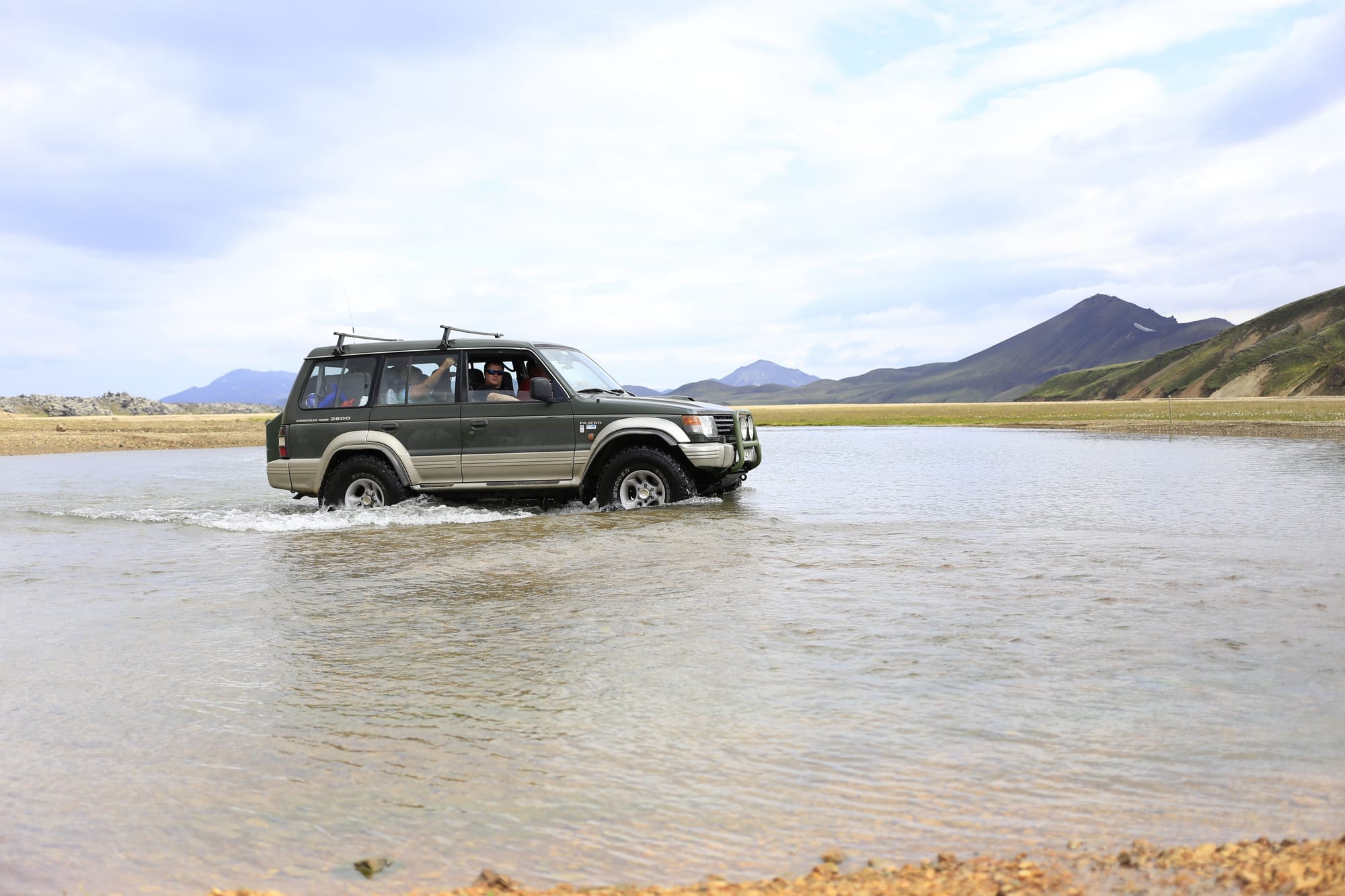
- River Crossings: Never cross a river without walking it first. If the water is moving fast and reaches above your knees, it is too deep for a standard 4x4. Always cross slowly in 4-Low (4L) gear to maintain consistent engine RPMs and prevent water from sucking into the exhaust.
- Washboards: Unpaved dirt tracks quickly develop "washboards"—hard, rhythmic ripples in the dirt. Driving 20 km/h over washboards will violently shake your car. Counterintuitively, accelerating to around 50 to 60 km/h allows the vehicle's suspension to "float" over the tops of the ripples, making the ride significantly smoother.
- Dust: In the summer, the dust is relentless. Always drive with your windows rolled up and your AC set to "recirculate" to keep the cabin pressurized and dust-free.
5. Cellular Coverage and Emergencies
Mongolia has surprisingly good mobile coverage, provided you are near a town.
- Carriers: Unitel and Mobicom have the widest rural coverage. Buy a prepaid tourist SIM card at the UBN airport or in Ulaanbaatar before you leave.
- Dead Zones: The moment you drop into a valley or enter a deep national park (like the Gobi Altai or Orkhon), you will lose all signal. If you break down in a dead zone, stay with your vehicle. The Mongolian countryside operates on a strict code of hospitality; the next passing driver will stop to help you.
Don't Want to Deal With the Logistics?
Managing offline maps, changing tires in the mud, and guessing which dirt track leads to the camp is not everyone’s idea of a vacation.
If you want the rugged overlanding experience without the stress of navigation and vehicle liability, JOROO can arrange a premium 4x4 that comes with a highly experienced local driver. They know the exact dirt tracks, handle the refueling, and let you focus entirely on the scenery.
🗺️ Plan Your Mongolia Road Trip
Whether you need a rugged self-drive 4x4 or a vehicle with a local expert driver, JOROO has the perfect option for your itinerary.
Request a Fixed Quote from JOROO →
Frequently Asked Questions (FAQ)
Can I buy Jerry cans for extra fuel in Ulaanbaatar?
If you are renting a self-drive 4x4 for a deep Gobi or Western Mongolia expedition, carrying an extra 20L jerry can of fuel is highly recommended. You can purchase approved metal or heavy-duty plastic fuel cans at the "Narantuul" Black Market or major auto parts stores in Ulaanbaatar.
Does my rental car come with a spare tire and tools?
Yes. Every vehicle booked through JOROO’s verified partners comes equipped with at least one full-size spare tire, a heavy-duty jack, a lug wrench, and basic tools. For extreme routes, you can request a vehicle with dual spare tires.
What should I do if my car gets stuck in the mud?
Do not aggressively spin the tires, as this will only dig the car deeper until the chassis rests on the mud. Engage 4-Low (4L), ensure the steering wheel is perfectly straight, and slowly try to reverse out exactly the way you came in. If you are deeply stuck, wait for a passing local vehicle to assist with a tow strap.